


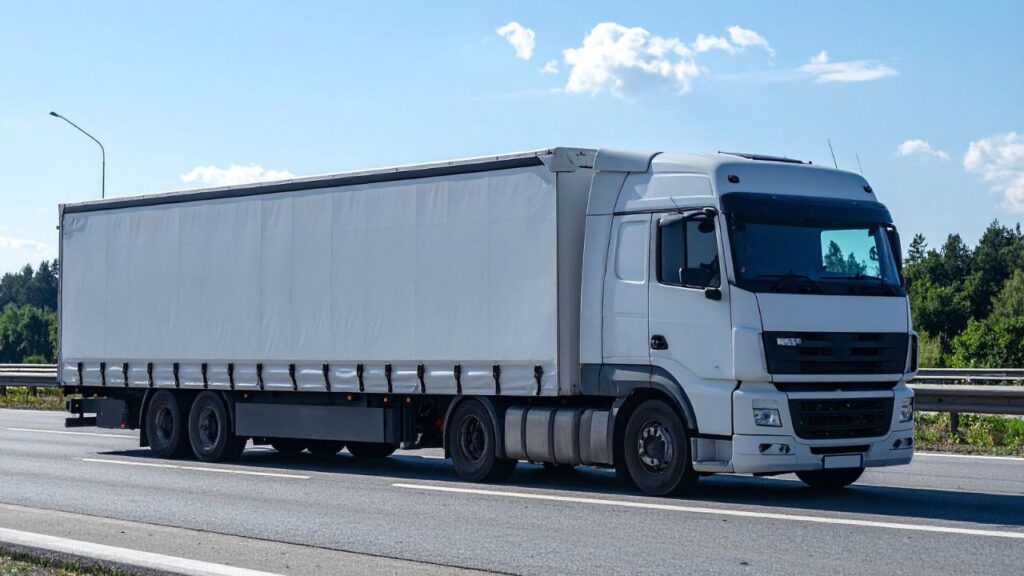
Key Takeaways:
- Truck type determines baseline premium: Box trucks start at $3,000 annually, while hazmat tankers can reach $35,000—a 10x difference based on vehicle classification alone.
- Cargo classification drives liability requirements: General freight requires $750,000 minimum liability, but hazardous materials push requirements to $5 million under FMCSA rules.
- Fleet size unlocks substantial discounts: Well-managed fleets of over 100 vehicles can achieve premium discounts up to 30%, though poor claims history negates these benefits.
- Documentation errors trigger re-rating: Mismatched VINs, incorrect weights, or missing hazmat endorsements cause underwriting delays and retroactive premium adjustments.
- Claims severity is driving market-wide increases: Auto liability claims tripled from $13,000 to $38,000 in two years, fueling premium hikes of 10-30% expected through 2025.
Your truck and its cargo are the biggest drivers of commercial insurance costs. A hazmat tanker can run $35,000 per year, while a box truck starts at $3,000. Underwriters price every combination of vehicle and load based on claim history, catastrophic risk, and federal liability floors. This guide breaks down how classification, cargo type and operational factors shape your premium—and what you can control.
What determines how truck type and cargo influence insurance costs?
Insurers build premiums around three core elements: the truck itself, what it hauls, and how it operates. Each factor feeds an algorithm that predicts claim frequency and severity. Your GVWR, body configuration, and cargo class set the baseline rate, while operational data—mileage, radius, driver records—fine-tune it.
How do insurers evaluate truck classification, weight, and use?
Insurers assess risk for each vehicle-cargo pairing by analyzing claim frequency, historical loss data, and catastrophic event potential. Physical characteristics and intended use drive the risk profile. They examine make, model, age, weight, and safety features closely. Repair costs and vehicle value determine your physical damage coverage premium.
Configuration and purpose directly predict claim exposure. OTR tractors average $10,200 annually ($8,952–$11,448 range) because long-haul operations mean high mileage, driver fatigue, and interstate complexity. Specialty truckers run $8,952 ($7,000–$10,000) due to specialized cargo and equipment demands—medium risk, but unique loss patterns.
What data points—GVWR, body type, operational radius—create rating categories?
Body type and weight class create distinct premium tiers. Box trucks average $7,500 ($3,000–$14,000), low-to-medium risk. Flatbeds hit $15,000 ($8,000–$22,000) for cargo securement and oversized-load exposure. Reefers cost $10,500 ($5,000–$16,000) with equipment failure and spoilage risk. Non-hazmat tankers run $17,500 ($10,000–$25,000) due to spill and rollover potential. Hazmat tankers top out at $23,600 ($12,200–$35,000)—the highest-risk class. Flatbed trucks can cost up to $22,000 annually, nearly double a standard box truck.
Which coverages are most affected by truck type and cargo class?
Truck value determines physical damage premiums, while cargo type sets liability minimums and motor-truck-cargo rates. High-risk combinations—hazmat tankers hauling explosives—stack the highest limits across all coverage forms. Lower-risk units see minimal cargo insurance costs and standard liability floors.
How does truck value impact physical damage coverage?
Specialized vehicles like hazmat tankers command the highest premiums—up to $35,000 annually. Standard box trucks sit at the low end, starting around $3,000. The spread reflects replacement cost, repair complexity, and loss frequency for each class.
When does cargo nature raise or lower motor-truck-cargo insurance rates?
Cargo type dictates both insurance cost per $100k of value and minimum liability. General freight runs $500 per $100k with a $750,000 liability floor—low risk. Perishables cost $800 per $100k ($750,000–$1,000,000 liability) due to spoilage exposure. Electronics jump to $1,500 per $100k ($1,000,000–$2,000,000 liability) for theft and replacement cost. Auto hauling costs $1,000 per $100k with the same $1,000,000–$2,000,000 range. Hazmat cargo hits $2,500+ per $100k and requires $1,000,000–$5,000,000 liability depending on material class.
Why do liability and general liability requirements change by vehicle class and load?
Federal regulations tie minimum liability to cargo risk. FMCSA sets $750,000 for general freight but pushes to $5 million for certain hazardous materials. High-risk cargo raises both claim likelihood and severity, forcing higher coverage. Transporting hazardous materials in a tanker requires a minimum of $5 million in liability coverage. General freight typically carries $1,000,000, while hazmat operations commonly need $5,000,000.
How do specific truck categories change risk and cost exposure?
Truck categories segmented by duty class and specialization. Light-, medium-, and heavy-duty designations reflect weight and operational scope. Specialized units—reefers, tankers, car haulers—carry unique failure modes and regulatory requirements. Vocational trucks add endorsement layers for dump bodies, tow equipment, and flatbed securement.
What distinguishes light-, medium-, and heavy-duty trucks in underwriting?
Box trucks face cargo protection, theft risk, and driver experience scrutiny. Flatbeds require cargo securement, oversized-load handling, and weather-exposure management. Non-hazmat tankers deal with liquid cargo, spill risk, and rollover potential—all high-severity concerns.
Why are specialized units like reefers, tankers, and car haulers rated differently?
Reefers carry equipment failure, spoilage, and temperature-control risk—one compressor failure can total a $200,000 load. Hazmat tankers add environmental damage and catastrophic loss potential on top of baseline tanker risks. Auto haulers face vehicle damage, high-value theft, and multi-unit transportation accidents that compound loss severity.
When do vocational trucks (dump, tow, flatbed) require added endorsements?
Flatbeds need endorsements for cargo securement failures, wide or heavy loads requiring permits, and greater weather damage exposure. Specialty truckers operate at medium risk but require specialized equipment coverage for unique operational tools.
Cargo type sets both the underwriting tier and regulatory minimum. Insurers are classified by FMCSA commodity groups, each with historical claim data and loss ratios. Hazardous materials, high-value goods, and perishables carry surcharges. General freight gets baseline rates.
Which commodities are considered high-risk or hazardous under FMCSA rules?
Hazardous Materials (Class 1-9) sit in the very high-risk category. Key concerns include explosive or flammable materials, environmental contamination, and strict DOT compliance requirements. FMCSA mandates $1,000,000–$5,000,000 liability depending on the specific cargo type within the classification.
How does hauling perishable or high-value freight change insurance obligations?
Perishables face temperature control failures, spoilage claims, and time-sensitive delivery pressures that amplify loss severity. Electronics cargo brings theft risk, high replacement costs, and secure storage requirements. Electronics premiums hit $1,500 per $100k (high risk), while perishables run $800 per $100k (medium risk).
What documentation proves proper cargo handling and reduces surcharges?
General freight requires standard documentation for cargo damage and theft—low risk classification. Proper documentation must match the commodity type to verify compliance and handling procedures. Missing paperwork flags underwriting concerns and can trigger re-rating.
Which operational factors amplify or offset truck-and-cargo risk?
Driver quality, operational geography, and active safety measures shift premiums within each truck-cargo category. Clean MVRs, urban versus rural garaging, and telematics data provide rate relief. Poor records, high-risk zones, and reactive management drive costs up.
How do driver experience, MVR, and training records influence pricing tiers?
Driver experience is a key underwriting factor, especially for box trucks, where operator skill directly impacts claim frequency. Qualifications and experience move carriers between pricing tiers—clean records unlock discounts, violations add surcharges.
Why do garaging ZIPs, mileage range, and fleet safety programs matter?
OTR long-haul operations face high annual mileage and interstate complexity that increase exposure. Operational radius and geographic coverage areas create distinct rating categories based on regional claim patterns, traffic density, and theft rates.
Can telematics, dashcams, or maintenance logs improve underwriting results?
Equipment failure prevention—particularly for reefer units—reduces claim exposure when documented through maintenance logs. Proactive safety measures and documentation demonstrate risk management commitment, often unlocking preferred-tier pricing or renewal credits.
How to analyze cost differences between truck types and cargo classes
Follow a five-step process to isolate rate variance across configurations. Start with vehicle specifications, layer in cargo classification, align coverage requirements, request itemized quotes, and evaluate fleet rating methods for multi-unit operations.
Step 1 – Identify truck specifications (make, body, GVWR, age, stated value)
Insurers examine make, model, age, weight, and safety features as primary rating variables. Vehicle value and repair costs set the physical damage coverage premium baseline before operational factors apply.
Step 2 – Classify cargo by FMCSA category (general freight, hazmat, perishables)
Use the FMCSA cargo classification system: General Freight, Refrigerated Goods, High-Value Goods, Automobiles, and Hazardous Materials. Each category carries a specific risk rating and liability requirement that directly impacts cost.
Step 3 – Align each exposure with the correct coverage form and limit
Match each truck type to its appropriate annual premium range. Then align cargo classification with required liability minimums and cargo insurance premiums per $100k to build accurate coverage layers.
Step 4 – Request separate quotes per configuration to see rate variance
Premium ranges vary significantly by configuration. Box trucks span $3,000–$14,000 while hazmat tankers run $12,200–$35,000. Request itemized quotes for each configuration to quantify the cost spread.
Step 5 – Compare composite vs. scheduled vehicle rating for multi-unit fleets
Large, well-managed fleets of over 100 vehicles can achieve premium discounts up to 30%. Fleet discount tiers range from 5% (2-5 trucks) to 30% (100+ trucks). Balance fleet size benefits against claims history and vehicle mix—discounts evaporate with poor loss runs.
Mismatched or missing documentation triggers re-rating, coverage gaps, and approval delays. VIN errors, incorrect weights, and cargo misclassification are the most common premium inflators. Missing endorsements or certifications stall underwriting and raise red flags.
Why do mismatched VINs, weights, or commodities cause re-rating?
Incorrect truck specifications lead to improper risk classification—underwriters price the wrong exposure. Misclassified cargo results in inadequate liability coverage assignment, forcing mid-term adjustments and retroactive premium charges.
How does missing reefer-unit proof or hazmat endorsement delay approval?
Temperature control equipment verification is required for refrigerated cargo coverage—no proof, no approval. Hazmat endorsements are mandatory for transporting Class 1-9 dangerous goods. Missing either document halts policy issuance.
What happens if BOLs or safety certificates aren’t attached during quoting?
Documentation gaps prevent accurate risk assessment. Underwriters can’t validate cargo handling procedures or safety compliance. Missing safety certificates delay underwriting approval and policy issuance, often pushing effective dates out weeks.
How can carriers control insurance costs without reducing coverage?
Strategic deductible selection, multi-coverage bundling, and proactive loss control reduce premiums without cutting limits. The key is balancing upfront savings against retention risk and demonstrating active risk management to underwriters.
The commercial auto insurance market faces profitability challenges with a projected 113% combined ratio in 2024. For every $100 in commercial auto liability premiums collected, insurers are projected to pay out $113 in claims and expenses. Strategic deductible selection balances premium savings against financial exposure while satisfying shipper and lender requirements.
When should fleets bundle auto, cargo, and general liability for rate credits?
Multiple coverage bundling delivers package discounts through single-carrier placement. Comprehensive coverage coordination also reduces gaps and overlaps, preventing claim disputes and double-premium scenarios.
How does proactive claims reporting and driver coaching reduce renewal hikes?
The average cost of an auto liability claim nearly tripled, jumping from $13,000 to $38,000 in the last two years. Active safety management demonstrates risk control to underwriters, mitigating renewal increases. Premium hikes of 10-30% are expected to continue into 2025, making proactive loss control critical.
When should you re-evaluate policies as trucks or loads change?
Policies should be reviewed when vehicle values shift, cargo exposures change, or operations expand. Annual reviews catch drift between stated values and market reality. Mid-term reviews are warranted when you add routes, change commodity types, or enter new operational seasons.
How often should you update stated values and cargo sub-limits?
Vehicle values and cargo exposures change over time, requiring periodic review to avoid under-insurance. Market value fluctuations impact replacement cost calculations—outdated stated values leave gaps after total losses.
When do new routes, contracts, or seasons justify higher limits?
Operational changes alter your risk profile and demand coverage adjustments. Seasonal variations in cargo types and routes shift exposure levels—winter ice-road hauling differs sharply from summer dry-van freight.
Which renewal metrics (loss runs, inspection scores) unlock better pricing tiers?
Premium increases of 10-30% are budgeted for umbrella and excess liability coverage in 2025. Loss history and safety scores directly impact renewal pricing—clean records and high inspection scores unlock tier upgrades. Hardened market conditions are driving sustained premium increases through 2025, making strong metrics essential.
How does Strong Tie Insurance help carriers balance coverage and cost?
Strong Tie Insurance specializes in commercial trucking coverage across all policy types and cargo classes. Our underwriting support team streamlines federal filings and documentation, accelerating approvals while securing competitive rates through multiple carrier markets.
Which truck and cargo policies do we specialize in (auto liability, physical damage, motor-truck-cargo, GL, workers’ compensation)?
We offer a comprehensive commercial trucking insurance portfolio covering auto liability, physical damage, motor-truck-cargo, general liability, and workers’ compensation. Our specialized expertise spans all coverage types required for commercial carriers.
How does our underwriting support team assemble the required proofs and filings (BMC-91/91X, MCS-90) for faster approval?
Our team handles the streamlined documentation process for FMCSA compliance, including BMC-91/91X and MCS-90 filings. We provide expert guidance on federal filing requirements and endorsements, cutting approval times and preventing processing delays.
We access multiple carrier markets for optimal pricing across truck and cargo combinations. Our industry-specific knowledge helps navigate complex underwriting requirements, while our support for managing documentation, classifications, and coverage optimization keeps premiums competitive without sacrificing compliance or protection.