


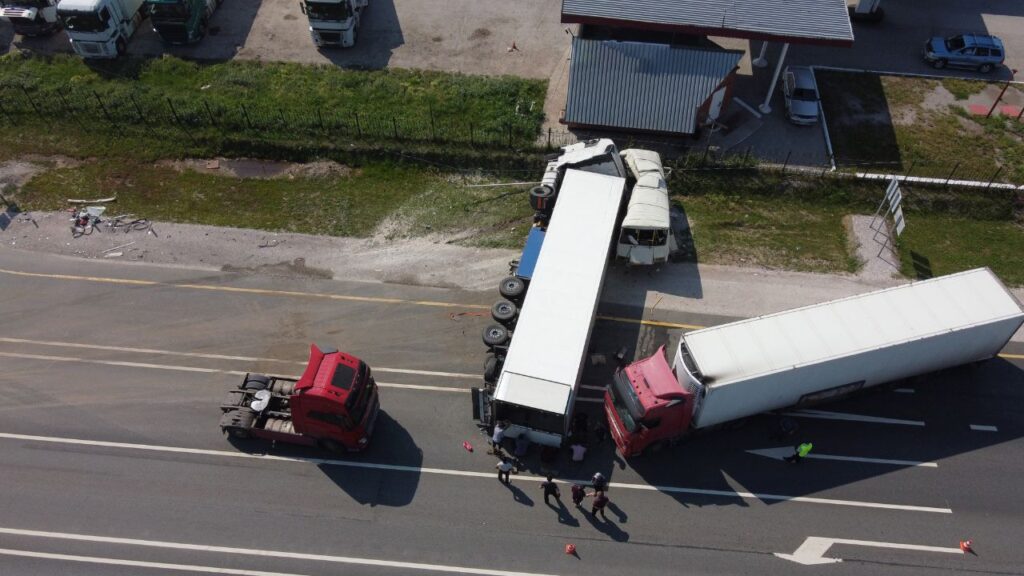
Your truck is your business. Physical damage coverage protects the asset. Two policies do that job: collision and comprehensive. They cover different causes of loss. Knowing which one responds before a claim happens keeps you from finding out the hard way.
Key Takeaways:
- Cause of loss determines which policy responds — impact triggers collision, everything else triggers comprehensive, regardless of the dollar amount of the damage.
- Hitting a deer is a comprehensive claim, not a collision claim — animal collisions are explicitly excluded from collision coverage and surprise more drivers than any other scenario.
- Both comprehensive and collision pay Actual Cash Value at time of loss, not replacement cost — a depreciated $120,000 truck can leave a significant financing gap if ACV is not reviewed regularly.
- Physical damage insurance is not federally mandated — the FMCSA’s $750,000 minimum covers liability only, leaving the truck itself entirely unprotected without separate collision and comprehensive policies.
- Dropping either coverage to save on premiums creates a complete blind spot — collision without comprehensive leaves theft, fire, and weather uninsured; comprehensive without collision leaves every road-impact loss uninsured.
What Is Collision Coverage in Auto Insurance?
Collision coverage pays for damage to your vehicle caused by impact. It does not cover weather damage, theft, or any loss that is not a road contact event.
What Types of Road-Related Accidents Does Collision Coverage Usually Pay For?
Collision pays for three core incident types: a crash with another vehicle, a rollover, and impact with a fixed object. Fixed objects include guardrails, poles, medians, and loading dock structures. If the truck made contact with something and stopped, it is a collision claim.
Does Collision Coverage Apply If You Hit Another Car, a Guardrail, or a Pole?
Yes. Any impact with a fixed or moving object is a collision claim regardless of fault or speed. A scrape against a loading dock at 3 mph and a highway collision at 65 mph are both collision claims. The triggering event is impact, not severity.
Why Is Collision Coverage Focused on Impact Damage to Your Vehicle?
Collision protects you, not others. Liability coverage pays for damage your truck causes to third parties. Collision pays for damage to your own truck during an impact event. Non-impact losses fall under a different policy. That policy is comprehensive.
What Is Comprehensive Coverage in Auto Insurance?
Comprehensive — also called Other than Collision — covers damage to your vehicle from events that are not impact-based. Strong Tie Insurance includes comprehensive among its commercial truck insurance options, described as protection against non-collision incidents like theft, vandalism, and natural disasters.
What Types of Non-Collision Losses Does Comprehensive Coverage Usually Pay For?
Comprehensive covers theft, vandalism, fire, flood, hail, storm damage, falling objects, and animal collisions. These are events that happen to the truck, not because of how the truck was driven.
Does Comprehensive Coverage Apply to Floods, Storm Damage, Theft, or Vandalism?
Yes to all four. Flood coverage requires a comprehensive policy. Without it, there is no physical damage recovery for water loss. Hail is one of the most frequent comprehensive claims in commercial trucking. Theft and vandalism are covered regardless of where the vehicle is parked.
Why Is Comprehensive Coverage Often Called Protection for Acts of Nature?
The label captures the core concept: comprehensive covers losses outside the driver’s control. Weather, falling objects, and animal strikes are externally imposed. So are theft and vandalism. The driver’s behavior is not the cause, and that is the dividing line between comprehensive and collision.
What Is the Main Difference Between Comprehensive and Collision Coverage?
One rule decides everything: cause of loss. Impact means collision. No impact means comprehensive. The dollar amount of the damage is irrelevant.
How Does the Cause of Damage Decide Which Coverage Applies?
The insurer traces the triggering event. If the chain starts with a vehicle impact, it is a collision claim. If it starts with a non-impact peril such as weather, theft, or an animal, it is comprehensive. The cause of loss triggers the policy, not the size of the repair bill.
Why Is Road Impact Usually a Collision Claim but Weather Damage a Comprehensive Claim?
A truck slamming into a guardrail is a collision claim because the damage came from a physical contact event. A hailstorm denting the same truck in a parking lot is a comprehensive claim because no impact occurred. Same vehicle. Same repair shop. Different policies. Reviewing your full semi-truck insurance coverage stack before a loss helps avoid that discovery at the worst possible time.
Can the Same Vehicle Loss Trigger Confusion Between These Two Coverages?
Yes. An animal strike followed by swerving into a barrier involves two separate events. A storm that creates a road hazard leading to a crash blurs the line further. Those scenarios are addressed below.
What Does Collision Coverage Cover That Comprehensive Coverage Does Not?
Collision handles every road-impact scenario. None of the following events trigger a comprehensive policy.
What Happens If You Crash Into Another Vehicle While Driving?
Vehicle-to-vehicle collision is a collision claim regardless of fault. Comprehensive does not respond to any vehicle-to-vehicle impact. The driver files against their own collision policy for truck damage and against the at-fault party’s liability policy for third-party damage.
What Happens If You Slide on a Wet Road and Hit a Fixed Object?
A wet-road slide into a pole, guardrail, or dock structure is a collision claim. The wet road is a contributing factor, not the covered peril. The impact with the fixed object triggers collision. Loading dock scrapes are included.
What Happens If Your Vehicle Rolls Over in a Road Accident?
A rollover is a collision event, specifically a single-vehicle incident. It is covered under collision regardless of what caused it: road conditions, overcorrection, or load shift. Comprehensive does not cover rollovers.
What Does Comprehensive Coverage Cover That Collision Coverage Does Not?
Everything that happens to the vehicle outside of driving and impact falls under comprehensive. Collision does not respond to any of the following.
What Happens If a Flood Damages Your Parked Vehicle?
Flood and water damage is a comprehensive claim, parked or in motion. Without comprehensive, there is no physical damage recovery for flood loss. Collision does not cover flood damage under any interpretation.
What Happens If Hail, Wind, or a Falling Tree Damages Your Car?
Hail, storm damage, and falling objects are comprehensive claims. Hail is one of the most common comprehensive claim types in commercial trucking. Falling tree limbs, road debris, and cargo shed by other vehicles are also comprehensive. Collision does not respond to any weather-driven or gravity-driven damage.
What Happens If Your Vehicle Is Stolen or Damaged by Fire?
Theft, fire, and vandalism are comprehensive claims. Theft pays up to the Actual Cash Value (ACV) of the vehicle at the time of loss, not replacement cost. Vandalism including slashed tires and broken glass is also covered under comprehensive. Collision covers none of these.
How Do Real-World Claims Show the Difference Between These Two Coverages?
Three common scenarios show exactly where each policy applies and where drivers commonly guess wrong. Getting the cause of loss right matters because a misclassified claim is a denied claim. See how common causes for denied claims by trucking insurance companies often trace back to coverage gaps the driver did not know existed.
Is Hitting a Deer a Collision Claim or a Comprehensive Claim?
Hitting a deer is a comprehensive claim. Animal collisions are excluded from collision coverage. A deer strike is a non-impact event: the animal caused the damage, not a road contact. This surprises many drivers who assume any moving-vehicle incident is a collision claim.
Is Water Damage From a Storm a Comprehensive Claim Even If the Car Was Parked?
Yes. Storm water damage is comprehensive regardless of vehicle status. The policy covers the peril, not the vehicle’s activity. A flooded parked truck and a moving vehicle struck by a falling tree limb are both comprehensive claims.
Is Swerving to Avoid an Animal and Hitting a Fence a Collision Claim?
Yes. The decisive event is the impact with the fence. The deer was never struck. The avoidance maneuver does not convert the claim to comprehensive. Impact equals collision.
When Can the Difference Between Comprehensive and Collision Coverage Become Blurry?
Most claims are clear-cut. A few scenarios create genuine ambiguity. Insurers resolve them by identifying the primary cause of loss.
What If a Storm Causes a Road Hazard That Leads to a Crash?
If storm debris creates a hazard and the driver impacts it, the claim is typically a collision. The storm is a contributing factor. The vehicle impact is the triggering event. Impact takes precedence. Understanding how truck insurance companies may deny claims based on cause-of-loss disputes helps drivers document incidents accurately from the start.
What If Floodwater Causes Engine Damage While You Are Driving?
Engine damage from floodwater ingestion while driving is a comprehensive claim. The cause of loss is the water, not an impact. One important note: wear and tear is excluded from both collision and comprehensive. Flood damage is covered. Deferred maintenance is not.
How Do Insurers Decide the Primary Cause of Loss?
Insurers trace the causal chain to the triggering event. If the chain starts with a non-collision peril, it is comprehensive. If it starts with a vehicle impact, it is a collision. When both types of events occur, the primary cause determines the policy.
How Do Deductibles Work for Comprehensive and Collision Coverage?
Each coverage carries its own independent deductible. Choosing the right amount for each affects both the premium and out-of-pocket exposure on any given claim.
Do Comprehensive and Collision Usually Have Separate Deductibles?
Yes. Comprehensive and collision deductibles are set independently at policy inception. A driver can carry a $1,000 collision deductible and a $500 comprehensive deductible simultaneously. Both apply separately.
How Can Different Deductible Amounts Change Your Out-of-Pocket Cost?
Commercial physical damage deductibles typically range from $1,000 to $2,500 per incident. A higher deductible lowers the annual premium but raises the out-of-pocket floor on any claim. A driver who selects a $2,500 deductible to save on premiums must be able to absorb $2,500 out of pocket even on a minor incident.
Should You Choose the Same Deductible for Both Coverages?
Not necessarily. Collision claims occur more frequently and with higher severity than comprehensive claims. A lower collision deductible provides more protection where the risk is highest. A higher comprehensive deductible reduces premiums on the coverage you are less likely to use. Match the deductible to the probability of the claim.
Why Do Lenders and Vehicle Owners Often Want Both Coverages?
Neither coverage is federally mandated. But lenders treat both as mandatory on financed equipment. Together they provide complete physical damage protection that neither policy can deliver alone.
Why Is Full Physical Damage Protection Often Stronger With Both Coverages Together?
The FMCSA requires a minimum of $750,000 in Bodily Injury and Property Damage (BIPD) liability for for-hire carriers hauling non-hazardous freight. That is a liability requirement. It protects third parties. It does not require any physical damage coverage on the insured vehicle. Lenders fill that gap by requiring both coverages on financed trucks. Fleet operators and small business owners can review business insurance options for comprehensive commercial coverage solutions.
When Might a Financed or Leased Vehicle Require Comprehensive and Collision?
Lenders and lessors typically require both coverages as a loan condition. That requirement remains until the vehicle is paid off. Dropping either coverage without lender approval puts the financing agreement in breach.
Why Can Dropping One Coverage Create a Protection Gap?
Dropping comprehensive leaves, theft, weather, fire, vandalism, and animal strikes are entirely uninsured. Dropping collision leaves all road-impact damage uninsured. One additional gap applies to both: personal property inside the vehicle is excluded from both comprehensive and collision and requires a separate endorsement.
How Should Drivers Decide Whether They Need Comprehensive, Collision, or Both?
Three factors drive the decision: vehicle value, local weather exposure, and daily driving risk.
How Does Vehicle Value Affect the Decision?
Physical damage insurance typically costs 3% to 6% of the truck’s stated value per year. For a $120,000 late-model tractor, that is $3,600 to $7,200 annually. As the truck depreciates, the ACV payout shrinks along with it. Check current ACV against the financing balance before each renewal.
How Does Local Weather Risk Affect the Need for Comprehensive Coverage?
Drivers running routes through flood-prone, wildfire-adjacent, or severe-weather corridors carry higher comprehensive risk. Premiums reflect that exposure. Operating in high-risk regions and carrying limited claims history both produce higher premiums. Assess weather exposure along your regular routes before deciding on comprehensive limits.
How Does Daily Driving Risk Affect the Need for Collision Coverage?
Owner-operator physical damage coverage runs $1,500 to $5,000 per year with wide variance based on driving record. High annual mileage on dense urban routes raises collision frequency and makes collision coverage more valuable. A clean driving record lowers premiums. Frequent claims history raises them significantly.
What Coverage Gaps Should Drivers Watch for Before a Loss Happens?
Gaps are invisible until a claim is denied. The two most common ones come from carrying one type of physical damage coverage without the other.
What Damage Is Not Paid for If You Carry Collision but Not Comprehensive?
Without comprehensive insurance, theft, vandalism, fire, flood, hail, falling objects, and animal collisions are entirely uninsured. None of these trigger the collision policy. The driver absorbs every dollar out of pocket.
What Damage Is Not Paid for If You Carry Comprehensive but Not Collision?
Without collision, every road-impact loss is uninsured: vehicle-to-vehicle crashes, fixed object impacts, and rollovers. These are the highest-frequency physical damage claims for a working driver. Comprehensive alone provides no protection during a normal day on the road.
Why Should Drivers Review Physical Damage Coverage Before Storm Season or Heavy Travel?
The most expensive hidden gap is the ACV trap. Both comprehensive and collision pay ACV at time of loss, not replacement cost. If a $120,000 truck has depreciated to $80,000 ACV, the payout is $80,000, not what a replacement costs. Review ACV against your financing balance before storm season or an extended run.
What Should Drivers Remember About Comprehensive vs. Collision Coverage?
Two principles govern every physical damage decision: cause of loss determines which policy responds, and carrying both eliminates the most expensive surprises.
Why Does the Cause of Damage Matter More Than the Size of the Claim?
The triggering cause determines the policy, not the dollar amount. A $500 deer strike is comprehensive. A $50,000 highway crash is a collision. Having maximum coverage limits does not help if the wrong policy is in place for the type of loss.
Why Can Having Both Coverages Reduce Expensive Surprises After a Loss?
Comprehensive and collision are designed to be carried together. Neither covers cargo. Cargo is a separate coverage with its own FMCSA minimum requirements. Physical damage covers the vehicle. Cargo insurance covers the freight. Carry both physical damage coverages, verify cargo coverage separately, and make sure your full stack is in place before a loss finds the gap. Get a free quote today and let a Strong Tie agent review your coverage before the next run.