


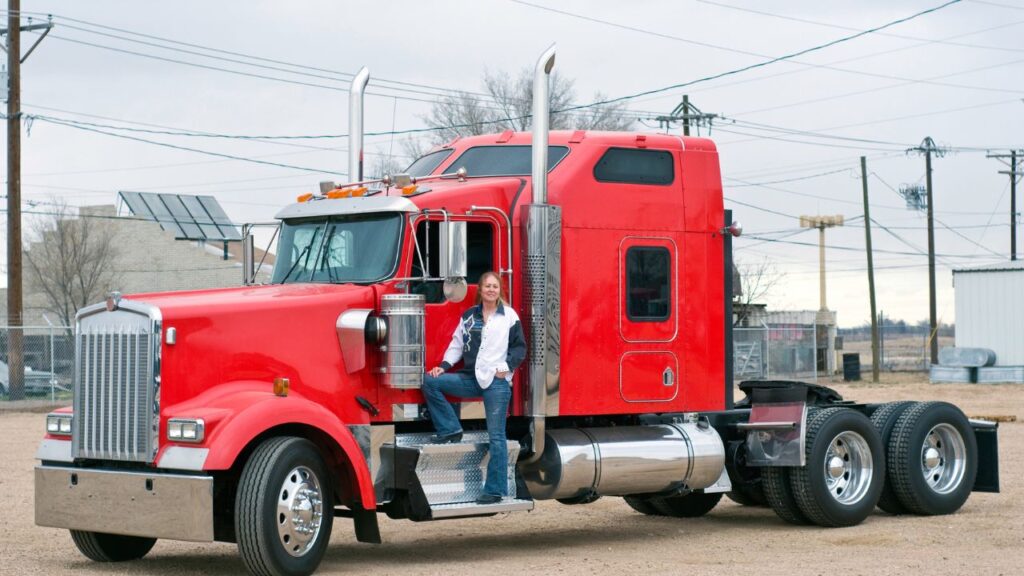
Most trucking operations carry primary liability and assume they’re covered. They’re not — not fully. Primary liability handles the road. General liability handles everything else. The gap between the two is where claims get denied, out-of-pocket costs pile up, and contracts get lost. This guide explains exactly what each policy covers, where it stops, and what it costs to close the gap.
Key Takeaways:
- Primary liability covers on-road accidents only — the moment your truck stops moving on a public road, the policy stops responding.
- General liability is not federally mandated, but most freight brokers require it before awarding loads — making it commercially essential.
- The FMCSA’s $750,000 minimum for general freight is the legal floor, not the market standard — most brokers require $1,000,000 per occurrence.
- The three most common coverage gaps — dock damage, premises injury, and the minimum-limit trap — all result in full personal out-of-pocket exposure without GL.
- A complete owner-operator insurance stack runs $14,000–$22,000/yr — factor that into your rate-per-mile before you sign a single contract.
What Is Primary Liability Insurance in Commercial Truck Insurance?
Primary liability is the federally mandated coverage every motor carrier must carry. It protects other people — not you, not your truck, not your cargo.
What Does Primary Liability Cover for Drivers and Carriers?
Commercial truck insurance starts here. Primary liability pays for bodily injury and property damage your truck causes to third parties in an on-road, at-fault accident. It covers medical bills, lost wages, pain and suffering, and damage to other vehicles or infrastructure. It does not cover your own truck, your cargo, or anything that happens off a public road.
Why Is Primary Liability Required?
The FMCSA mandates minimum financial responsibility for all interstate carriers. Requirements vary by cargo type:
| Cargo Type | FMCSA Minimum |
| General Freight (non-hazardous, GVWR > 10,001 lbs) | $750,000 |
| Household Goods Movers (intrastate) | $300,000 |
| Hazardous Materials | $1,000,000 |
| Explosives / High-Risk Cargo | $5,000,000 |
What Does It Cost?
For new-authority owner-operators, primary liability runs $5,000–$12,000 per truck annually. That range reflects driving history, cargo type, operating region, and authority age. It’s the single largest insurance line item for most independent operators.
What Is General Liability Insurance in Commercial Trucking?
General liability covers your business — not your driving. It responds to incidents that happen off the road and outside the scope of your auto policy.
What Business Risks Does GL Cover?
GL protects against slip-and-fall injuries at your premises, property damage during loading and unloading, mistaken delivery claims, and advertising injury. It costs $500–$2,000/yr with a $1,000,000 per-occurrence limit and a $2,000,000 annual aggregate. It is not federally mandated — but most freight brokers now require it before awarding loads. Also review business insurance options if you employ drivers or operate a facility.
How Does GL Apply to Non-Driving Incidents?
Any incident that occurs while your truck is stationary, during a business interaction, or at a facility you operate falls under GL — not primary liability. Backing into a dock at 2 mph. A broker slipping on ice in your yard. A delivery sent to the wrong address. None of these trigger your primary policy. All of them trigger GL.
Why Do Trucking Businesses Need Both?
Primary liability ends the moment you’re no longer on a public road in motion. GL begins exactly there. The two policies are designed to be used together — one doesn’t backstop the other. Running only one leaves a structural gap in your protection.
What Are the Key Differences Between Primary Liability and General Liability?
Coverage trigger is the essential distinction. The wrong policy at claim time means a denial.
How Does Coverage Trigger Differ?
Primary liability triggers on any at-fault, on-road vehicle accident. GL triggers on any non-driving business operation incident. The boundary is clean: moving vehicle on a public road = primary. Everything else = GL. Knowing which policy applies before an incident is the difference between a covered claim and an out-of-pocket loss.
How Do Limits and Scenarios Differ?
The FMCSA’s $750,000 minimum is a legal floor, not a commercial standard. Most freight brokers require $1,000,000 per occurrence. A truck that causes $1,200,000 in damages with only the minimum policy leaves a $450,000 gap — covered personally by the operator. GL carries its own $1,000,000 per-occurrence limit for business operations claims. The two limits are independent and do not stack with each other.
What Does Primary Liability Cover That General Liability Doesn’t?
Primary liability is the road policy. GL has no role in on-road vehicle accidents.
Bodily Injury to Another Driver
When your truck causes an accident that injures another driver, primary liability pays their medical costs, lost wages, and legal damages. This is the core function of the policy. GL specifically excludes auto-related bodily injury — it is not a backup for collision claims.
Property Damage in a Highway Accident
Guardrails, other vehicles, road infrastructure, third-party cargo in another truck — all covered by primary liability in an at-fault collision. GL explicitly excludes commercial auto property damage. The exclusion exists in every standard GL policy and cannot be waived.
Why Roadway Accidents Are Excluded from GL
Regulators and insurers treat vehicle operation as a separate risk class with its own actuarial profile. GL policies contain a standard commercial auto exclusion. The FMCSA mandates auto coverage separately precisely because on-road risk is categorically different from business operations risk.
What Does General Liability Cover That Primary Liability Doesn’t?
Off-road incidents are GL territory. Primary liability offers no protection for anything that happens away from a moving vehicle on a public road.
Customer Injured at Your Facility
A broker visits your yard and slips on ice. A driver falls on your loading bay. A vendor trips at your office. Primary liability doesn’t respond — you’re not driving. GL covers the medical expenses and legal defense. Without it, you pay out of pocket and absorb any judgment personally.
Property Damage During Business Operations
You back into a warehouse dock during unloading and cause $15,000 in damage. The truck wasn’t moving on a public road — primary liability does not apply. No GL means no coverage. You pay the repair bill and risk losing the shipper relationship. This dock damage scenario is the most common GL gap in trucking operations.
Slip-and-Fall and Premises Liability
Any location where you conduct business qualifies as “premises” — not just a fixed office. Fuel yards, parking areas, loading bays, and drop yards all create premises liability exposure. GL covers third-party bodily injury and property damage at all of them. Primary liability covers none of them.
Why Do Coverage Gaps Exist Between These Two Policies?
The gap is structural, not accidental. These are two distinct risk categories with different triggers, different actuarial bases, and different regulatory requirements.
Why the Risks Are Separated
The FMCSA regulates commercial auto liability separately from general business liability because on-road vehicle risk and business operations risk behave differently. Claim frequency, severity, and triggering events are different enough that insurers underwrite them as separate products. There is no single policy that covers both.
Real Scenarios That Fall in the Gap
Three documented gaps that cost trucking operators out-of-pocket losses:
- Dock Damage: Stationary truck backs into a warehouse door. Primary: not covered. No GL: full personal exposure.
- Premises Injury: Visitor slips at your yard. Primary: not covered. No GL: full personal exposure.
- Minimum Limit Trap: $1.2M accident judgment vs. $750K policy = $450,000 personal liability.
Why Gaps Get Discovered After a Claim
Most trucking operators buy what’s legally required and stop. Policy exclusions and coverage triggers are rarely read before signing. The gap is invisible until a claim is denied. A proactive policy review with an independent agent is the only reliable way to find gaps before they find you.
How Do Trucking Companies Close the Protection Gap?
Closing the gap requires carrying both primary liability and GL — then adding supplemental coverages based on your operational model.
Additional Policies That Fill Liability Gaps
Primary and GL together still leave exposure in specific areas. Key supplemental policies:
| Supplemental Coverage | Annual Cost |
| Bobtail / Non-Trucking Liability | $350 – $600/yr |
| Trailer Interchange Insurance | $800 – $1,700/yr |
| Trailer Interchange Coverage Limit | $20,000 – $40,000 |
| Owner-Op (Own Authority) — Full Package | $14,000 – $22,000/yr |
How Umbrella Coverage Extends Protection
An umbrella policy sits above your primary liability, GL, and other underlying policies. When any underlying limit is exhausted, the umbrella activates. It raises your effective coverage ceiling across all liability exposures at once — and is the most cost-efficient way to do it.
When to Review Coverage With an Advisor
Review triggers: new authority, new cargo type, new broker requiring higher limits, added employees, new facility, or annual renewal. Review your trucking insurance policy at least once a year. A growing operation with static coverage is a gap in motion.
What Policies Work Together With Primary Liability?
Primary liability handles third-party on-road claims. It takes a full stack of supporting policies to cover everything else.
Motor Truck Cargo Insurance
Neither primary liability nor GL covers the freight in your trailer. Cargo insurance does. The FMCSA minimum is just $5,000 per vehicle — far below the value of most loads. Standard policies run $100,000–$250,000 or more. Own-authority operators pay $500–$2,000/yr. Confirm exactly when a carrier’s cargo policy applies before assuming you’re covered on leased runs.
Physical Damage Coverage
Primary liability doesn’t touch your own truck. Semi-truck insurance physical damage coverage protects the vehicle itself — collision for accidents, comprehensive for theft, fire, hail, and weather. Combined, it runs 3%–6% of your truck’s stated value annually. On a $120,000 tractor, that’s $3,600–$7,200/yr, with deductibles of $1,000–$2,500. Owner-operators pay $1,500–$5,000/yr depending on truck value and history. Lenders require it on financed equipment.
Workers’ Compensation
Company drivers are covered by workers’ comp. Owner-operators are independent contractors — they’re ineligible. The substitute is occupational accident insurance at $1,500–$2,500/yr. It covers work-related injury medical costs and lost income. Individual health insurance adds $400–$800/mo. Leased owner-operators running a full supplemental stack pay $3,600–$5,000/yr total.
What Should Trucking Businesses Evaluate When Comparing Liability Coverage?
Coverage decisions should be driven by market requirements, not just legal minimums.
What Limits Are Standard?
The FMCSA floor is $750,000 for general freight. The market standard is $1,000,000 per occurrence — required by most freight brokers and shippers. Carrying the minimum can disqualify you from the loads that pay best. GL adds $1,000,000 per occurrence and $2,000,000 aggregate for business operations exposure. Both limits are independent.
How Requirements Vary by Authority and State
FMCSA requirements apply to interstate operators. State-regulated intrastate carriers may face different minimums. Cargo type escalates requirements significantly — general freight ($750K) versus hazmat ($5M). Why trucking companies review policies regularly matters most when operations change — new cargo, new routes, new broker relationships.
Why Exposure Reviews Matter
Coverage that was adequate last year may not be adequate today. A new broker requiring a $1M primary, a new facility creating premises liability, a new cargo type requiring a higher FMCSA minimum — all create gaps if the policy isn’t updated. Review annually. Review after any material operational change.
What Should Trucking Companies Understand About Liability Before a Claim Happens?
The distinction between primary and general liability isn’t academic — it determines whether a claim is covered or denied.
Why the Difference Is Critical
Every trucking operation that drives a vehicle AND interacts with premises, docks, shippers, or employees needs both primary liability and GL. One does not backstop the other. The coverage gap is structural and permanent. There is no workaround short of carrying both policies.
How Identifying Gaps Reduces Financial Risk
A proactive policy review costs nothing. A $450,000 gap discovered in court costs everything. The only way to know your full exposure is to have an independent agent review your complete policy stack — coverage triggers, exclusions, limits, and supplemental policies — before a claim reveals what’s missing.
Don’t Wait for a Denied Claim to Find Your Coverage Gap
The gap between primary liability and general liability is real, predictable, and entirely preventable. Most trucking businesses find it the hard way — after a claim is denied and the bill lands in their lap.
Strong Tie Insurance has spent 20 years helping owner-operators, carriers, and fleet operators build the right coverage stack for their operation. No broker fees. Agents who know trucking, know the FMCSA, and know exactly what brokers and shippers require. Get a free quote today and find out where your gaps are before they find you.