


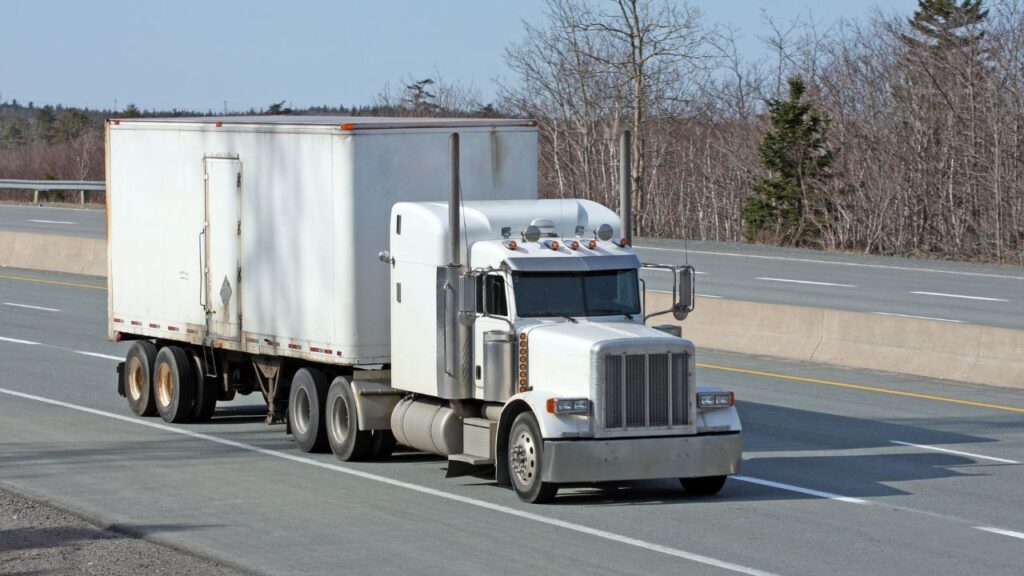
Telematics-based insurance is one of the most talked-about developments in commercial trucking today. The pitch is simple: drive safely, drive less, pay less. But the reality is more nuanced. Whether monitoring your driving saves money depends entirely on what your data actually shows. This guide breaks down both pricing models so you can make the right call for your operation.
Key Takeaways:
- Telematics saves money only when your mileage and driving data support it — enrolling with poor driving habits can raise your premium at renewal instead of lowering it.
- Pay-As-You-Drive programs produce average savings of 30% while full combined UBI programs can reach 45%, but only for operators with consistent, coachable driving patterns.
- Progressive’s Smart Haul customers with safe records save an average of $4,623 per year — adding a Motive AI dashcam stacks an additional 10% on top of that.
- Switching to telematics changes how your premium is calculated but does not change FMCSA minimum liability requirements or your need for cargo, physical damage, and non-trucking liability coverage.
- High-mileage long-haul fleets and operations that cannot actively manage driver behavior often get more value from the cost certainty of a fixed annual premium than from variable telematics pricing.
What Is Traditional Commercial Truck Insurance Pricing?
Traditional pricing sets one fixed annual premium before a single mile is driven. The cost does not change based on actual mileage or behavior during the policy year.
How Are Traditional Premiums Usually Calculated for Commercial Truck Insurance?
Insurers build a risk profile at policy inception and set a rate based on that snapshot. Owner-operators with their own authority typically pay $14,000 to $22,000 per year. Those leased to a motor carrier pay $3,600 to $5,000 per year. The gap reflects the insurer’s view of authority-based exposure, not actual driving performance.
What Rating Factors Matter Most When Insurers Set a Standard Annual Premium?
Fleet insurance premiums hit a record $0.102 per mile in 2024 and commercial auto premiums rose 8.8% in Q2 2025. These market-wide increases apply to all policyholders regardless of individual driving performance. Under traditional pricing, a clean driver and a poor driver in the same operation can pay nearly identical rates.
Why Do Traditional Premiums Usually Stay Fixed Even if Mileage Changes During the Policy Term?
A complete insurance package for an independent authority owner-operator runs $12,000 to $25,000 or more upfront and locks in for 12 months. If freight slows and mileage drops 30% mid-year, the premium does not follow. The rate was priced on estimated use, not actual use.
What Is Pay-Per-Mile or Telematics-Based Commercial Truck Insurance?
Telematics prices risk what actually happens behind the wheel. Mileage, driving behavior, and route data replace broad demographic assumptions.
How Does Pay-Per-Mile Insurance Use Mileage and Driving Data to Price Risk?
The global usage-based insurance market was valued at $61.8 billion in 2024 and is projected to reach $224 billion by 2035, with fleet UBI growing at a 31.4% compound annual growth rate. The model works by installing a telematics device into the vehicle’s OBD-II port, which transmits data to the insurer for ongoing risk assessment.
What Types of Driving Behavior Can Telematics Monitor in Commercial Trucking?
Telematics devices track speed compliance, harsh braking, rapid acceleration, aggressive cornering, idle time, fuel consumption, GPS location, engine health, and Hours of Service data. Every metric feeds directly into how the insurer prices the policy at renewal.
Why Do Some Insurers Use Telematics to Adjust Premiums More Closely to Real Truck Usage?
The 2026 Responsible Fleet Insurance Savings Report puts it plainly: insurers can now assess risk based on actual driver behaviors rather than demographic assumptions, and that shift creates real opportunities for fleet managers who invest in proper data collection. The insurer gets more accurate pricing. The operator gets direct control over what they pay.
What Is the Main Difference Between Traditional Premiums and Pay-Per-Mile Insurance?
One model prices what the truck might do. The other prices are what it actually does. That distinction determines who benefits and who does not.
How Does Fixed Pricing Differ From Usage-Based Pricing?
Pay-As-You-Drive (PAYD) programs base pricing on mileage driven and produce documented savings of 20% to 40% with an average of 30%. For an operator whose actual mileage consistently falls below what the insurer estimated, the gap between assumed and actual use is where the savings come from.
Why Can Mileage Tracking Change the Way Insurance Cost Is Measured?
Pay-How-You-Drive (PHYD) programs score actual driving behavior and produce savings of 15% to 30% with an average of 22%. Under this model, consistent speed compliance and smooth braking on a predictable route scores better than the same driver navigating dense urban stops with frequent lane changes. Learn more about how trucking companies approach fleet coverage decisions before choosing a pricing model.
How Do Driving Habits and Route Patterns Matter More Under Telematics Programs?
Under a fixed premium, a clean driver subsidizes a poor one. Under telematics, each driver’s behavior produces its own cost outcome. Route patterns matter because they shape the behaviors being scored. Steady interstate driving generates favorable data. Stop-and-go urban delivery generates more events for the insurer to evaluate.
How Can Telematics Monitoring Affect Commercial Truck Insurance Costs?
Telematics can reduce premiums, hold them steady, or increase them. The outcome depends entirely on what the data shows.
Why Can Lower Annual Mileage Reduce Costs Under a Pay-Per-Mile Model?
An owner-operator leased to a motor carrier with a traditional premium of $4,300 per year can reduce that to $3,655 under telematics, saving $645 annually (15%). For higher-premium operators the same percentage delivers far larger returns. A fleet of 20 trucks paying $260,000 traditionally saves $52,000 per year at 20%.
How Can Braking, Speeding, Idling, or Harsh Driving Affect the Premium?
Progressive’s Smart Haul program offers a 5% discount at enrollment with average annual savings of $4,623 (18%) for operators with safe records. Adding a Motive AI dashcam on top of Smart Haul generates an additional 10% in savings. The braking events, speed data, and cornering scores recorded throughout the year are what produce those numbers.
Why Can Monitored Driving Sometimes Raise Costs Instead of Lowering Them?
AXA XL reported 60% fewer incidents and an 86% reduction in claims for fleets using telematics. The flip side: fleets that do not achieve those outcomes have their risk documented precisely. If a driver shows consistent speeding, harsh braking, or aggressive cornering, that data can justify a higher premium at renewal rather than a lower one.
When Does Pay-Per-Mile Insurance Actually Save Money?
Telematics saves money for a specific type of operator. Knowing that profile is the first step.
Why Can Lower-Mileage Fleets or Seasonal Operators Benefit More From Mileage-Based Pricing?
An owner-operator with their own authority running a traditional policy at $18,000 per year can reduce that to $14,760 under telematics, saving $3,240 annually (18%). Operators running seasonal routes, regional hauls, or reduced mileage during slow freight cycles have a structural advantage because the formula reflects their actual exposure rather than an industry average.
How Can Safer Driving Patterns Improve the Chance of Savings?
FleetRabbit customers average an 18% premium reduction at their first renewal after adopting telematics. That figure represents operators who enrolled with confidence in their driving data. Clean records, consistent speed compliance, and low incident histories are the natural profile for telematics savings. Operators who are unsure about their data should review it before enrolling.
Why Might Owner-Operators With Limited Radius Operations See More Value From Telematics?
Munich Re has documented 15% premium rebates for fleets that implement telematics-enabled driver coaching programs. Operators running predictable local or regional routes, where behavior patterns are consistent and coaching can actually change outcomes, are better positioned to capture those rebates than long-haul drivers whose data is more variable and harder to manage proactively.
When Might Traditional Premiums Be the Better Choice?
Fixed pricing has real advantages when the business profile does not favor monitoring.
Why Can High-Mileage Trucking Businesses Prefer Predictable Fixed Premiums?
A mid-fleet operation running 20 trucks can save $52,000 per year under telematics — but only if the safety culture, driver compliance, and data management are all in place to produce favorable scores. At that scale, unfavorable telematics data also produces larger financial consequences. Fleets that cannot actively manage driver behavior may be better protected by the predictability of a fixed rate.
How Can Long-Haul or Time-Sensitive Operations Make Telematics Savings Less Likely?
Long-haul drivers covering high annual mileage across variable conditions, multiple drivers per truck, and time-sensitive delivery windows face more behavioral data risk. The higher the mileage and variability, the harder it is to consistently produce favorable telematics scores. For those operations, a fixed premium removes the uncertainty entirely.
Why Might Some Fleets Choose Stability Over Variable Pricing?
The Lytx DriveCam system integrates AI dashcam and telematics data and produces savings of 10% to 15%. But enrolling requires an upfront hardware and software investment. For operations where that investment competes with other capital needs and where the fleet cannot commit to active driver coaching, the administrative overhead of a telematics program may outweigh the potential savings.
What Risks or Trade-Offs Come With Telematics-Based Insurance?
Telematics programs carry real trade-offs beyond premium savings. Understanding them upfront prevents costly surprises.
Why Can Constant Monitoring Raise Privacy or Driver Acceptance Concerns?
Driver privacy concerns and morale issues are documented drawbacks of telematics adoption. Drivers who feel constantly monitored may resist the program or leave for competitors who do not monitor. For a semi-truck operation managing multiple employed drivers, this becomes an HR and retention issue alongside an insurance decision.
How Can Inaccurate Data, Device Issues, or Incomplete Trip Records Create Billing Disputes?
Telematics programs carry a documented risk of data misinterpretation and technical errors. A device that misreads a braking event, logs an incomplete trip, or fails to transmit during a route can produce a risk profile that does not reflect actual driving. Canal Insurance’s Canal TestDrive program is designed specifically for new authorities because newer operators lack the baseline data needed to contest inaccurate readings with confidence.
Why Should Trucking Businesses Understand How Driving Data Is Interpreted Before Enrolling?
Gallagher Insurance Managing Director of Transportation Chris Demetroulis is direct on this point: underwriters today take into consideration the implementation, the execution, and the actual reduction in incidents and claim size. Operators who enroll without actively coaching drivers and managing behavioral outcomes may find their data documents risk rather than reducing it.
What Driving Behaviors Usually Matter Most in a Telematics Program?
Not all monitored behaviors carry equal weight. Knowing which factors matter most helps operators focus on what to improve.
How Do Speeding and Harsh Braking Affect How Insurers View Risk?
Manage-How-You-Drive programs combine behavioral scoring with active fleet coaching and produce savings of 10% to 25% with an average of 18%. The coaching component exists because speed compliance and braking behavior are the two most controllable inputs. Fleets that actively coach drivers on speed management and anticipatory braking consistently outperform those that simply install the device.
Why Can Night Driving, Rapid Acceleration, or Route Type Influence Pricing?
AI dashcam integration produces documented savings of 10% to 15% with an average of 12%. The dashcam provides visual context that raw telematics data cannot. A hard braking event that looks aggressive on a data log may be captured on camera as a correct response to a road hazard, protecting the driver’s score. Rapid acceleration at night, captured on video, leaves no room for interpretation.
How Can Mileage Volume and Vehicle Use Patterns Shape Telematics-Based Cost?
Full UBI programs combining all telematics models produce savings of 25% to 45% with an average of 35%. Operators with consistent mileage patterns, stable routes, and predictable vehicle use are most likely to reach the higher end of that range. Variable mileage, irregular routes, and multi-driver trucks make it harder to sustain the consistency that produces maximum savings.
How Do Coverage Needs Stay the Same Even if Pricing Changes?
Switching to telematics changes how the premium is calculated. It does not change what coverage the law requires or the business actually needs.
Why Is Primary Liability Still the Foundation of Commercial Truck Insurance?
FMCSA minimums are fixed by federal law regardless of pricing model. General freight over 10,001 lbs requires $750,000. Oil transport requires $1,000,000. Hazardous materials and explosives require $5,000,000. A telematics program that prices premiums on mileage and behavior still must meet these floors from day one.
How Do Physical Damage and Motor Truck Cargo Coverage Remain Important Under Either Pricing Model?
Physical damage coverage runs $1,500 at minimum and $3,600 to $7,200 at best value. Motor truck cargo runs $350 at minimum and $800 to $1,800 at best value. These coverage lines exist because the truck can be destroyed and the cargo can be lost regardless of how the premium was calculated. A telematics discount does not lower the replacement cost of a $120,000 tractor.
Why Can General Liability, Non-Trucking Liability, and Workers’ Compensation Still Matter Beyond the Pricing Method?
Bobtail and non-trucking liability covers exposures that occur off-dispatch. General liability covers premises and operations. Workers’ compensation covers injured employees. None of these are affected by how many miles the truck drove or how the driver scored. Switching pricing models does not eliminate the need for any of them. Reviewing your complete business insurance coverage alongside any pricing change is essential.
What Are the Main Steps to Comparing Traditional Premiums With Pay-Per-Mile Insurance?
Four steps. Do all four before switching models or signing a telematics enrollment agreement.
Step 1: Compare Your Annual Mileage and Operating Radius
An owner-operator leased to a carrier can reduce a $4,300 traditional premium to $3,655 under telematics. That saving is worth pursuing only if actual mileage and radius are low enough to justify the enrollment and monitoring commitment. Low-mileage regional operators gain. High-mileage long-haul operators may not.
Step 2: Review Driver Behavior, Route Exposure, and Vehicle Usage Patterns
Peter Niro of Progressive Insurance puts it plainly: telematics programs help operators influence their insurance costs more directly by rewarding safe driving with lower rates. The prerequisite is knowing what your data will show before the insurer sees it. Review incident history, speeding events, and braking patterns against what the program will score. If the data supports you, enroll. If it does not, address the behaviors first.
Step 3: Compare Fixed Premium Quotes Against Mileage-Based Pricing Formulas
Nationwide’s SmartRide program offers savings of up to 40%. Geotab systems can reduce premiums by up to 20% per vehicle. Request a projected telematics premium based on your actual mileage and driving record, then compare it line by line against your current fixed quote. Include the device cost, any enrollment fees, and the cost of pricing variability over the policy year. For help running this comparison, review how to select the right trucking insurance company before committing.
Step 4: Decide Whether Possible Savings Outweigh Monitoring and Variability
The break-even calculation must account for the device cost, the management time required to coach drivers, and the financial risk if driving data produces an unfavorable score. If projected savings clear that threshold with a comfortable margin, telematics is the rational choice. If they do not, fixed pricing provides better cost certainty.
What Coverage or Cost Mistakes Can Happen When Businesses Focus Only on Savings?
A telematics program that lowers the premium but reduces coverage limits, or one that produces unfavorable data, can cost far more than it saves.
What Happens if a Lower Telematics Quote Comes With Reduced Coverage or Stricter Conditions?
A cargo damage claim costs $22,000 out of pocket on a minimum-limit policy versus $5,000 on adequate coverage. A major accident with liability exposure costs $95,000 out of pocket at minimum limits versus $15,000 on a best-value policy. If a telematics-based quote looks attractive because it carries lower limits rather than a better rate, the premium savings will be erased by a single incident.
Why Can Focusing Only on Mileage Hide Bigger Risks Tied to Cargo, Routes, or Driver History?
A truck total loss costs $45,000 out of pocket on a cheap policy versus $12,000 on adequate coverage. That $33,000 gap has nothing to do with how the premium was priced and everything to do with what the policy actually covers. A telematics evaluation that focuses on mileage efficiency can distract from a coverage limit review that is far more consequential to the business.
How Can a Pricing Model Look Cheaper at First but Cost More After Real Driving Data Is Reviewed?
An operator who enrolls expecting savings but whose driving data documents consistent speed violations, harsh braking, or off-route operations can end up with a premium increase at renewal, higher out-of-pocket exposure, and a data record that makes switching insurers more difficult. The pricing model did not create the risk. It just made it visible.
How Should Trucking Businesses Decide Between Traditional Premiums and Pay-Per-Mile Insurance?
The right model is the one that matches the actual operating profile of the business, not the one with the lowest number on the first quote.
Should You Choose Telematics if Your Trucks Drive Fewer Miles and Show Safer Habits?
GCI Gravel Conveyor, a 21-truck fleet, implemented Verizon Connect telematics and saved over $90,000 annually in fuel tax reporting alone. The data also revealed that their used trucks were costing three times more than expected due to hidden downtime, repair, and towing costs. For operators willing to use the data operationally, the total benefit often exceeds the insurance discount by a wide margin.
Should You Keep Traditional Pricing if Your Operation Needs Predictability and Stable Budgeting?
Operations that cannot commit to active driver coaching and behavioral compliance management often find that a fixed annual premium is a cleaner fit. One number, known upfront, with no mid-term variability and no data risk. For high-mileage long-haul fleets where telematics scores are harder to control, predictability has real financial value.
How Can a Side-by-Side Review Help Match the Pricing Model to Real Business Use?
Owner-operator Michael Castaldi installed a dashcam at his agent’s suggestion and enrolled in a telematics monitoring program. His rates remained stable while others in his network saw large hikes. The dashcam also provided exculpatory evidence in a minor incident, preventing a claim that would have raised his rates. That outcome came from an agent who understood his operation and matched the tool to the business. That conversation is the side-by-side review that produces the right answer.
Is a Telematics Program Right for Your Trucking Operation? Find Out Today.
The right pricing model depends on your mileage, your driving record, your routes, and how much control you can realistically maintain over behavioral data throughout the year. Getting that analysis wrong costs money in either direction.
Strong Tie Insurance has 20 years of experience helping owner-operators and fleet managers across California and six other states find the right commercial truck insurance coverage at the right price with no broker fees and no surprises. Whether you are weighing a telematics program or reviewing your existing fixed premium, contact Strong Tie Insurance today and get a straightforward assessment built around your actual operation.